
Dental implants in Turkey
Dental implants: fixed teeth instead of a gap
An implant replaces the root of a lost tooth. A crown, bridge or denture is then attached to it. Here you will find out how the treatment works, how long you stay in Turkey and what to look out for.
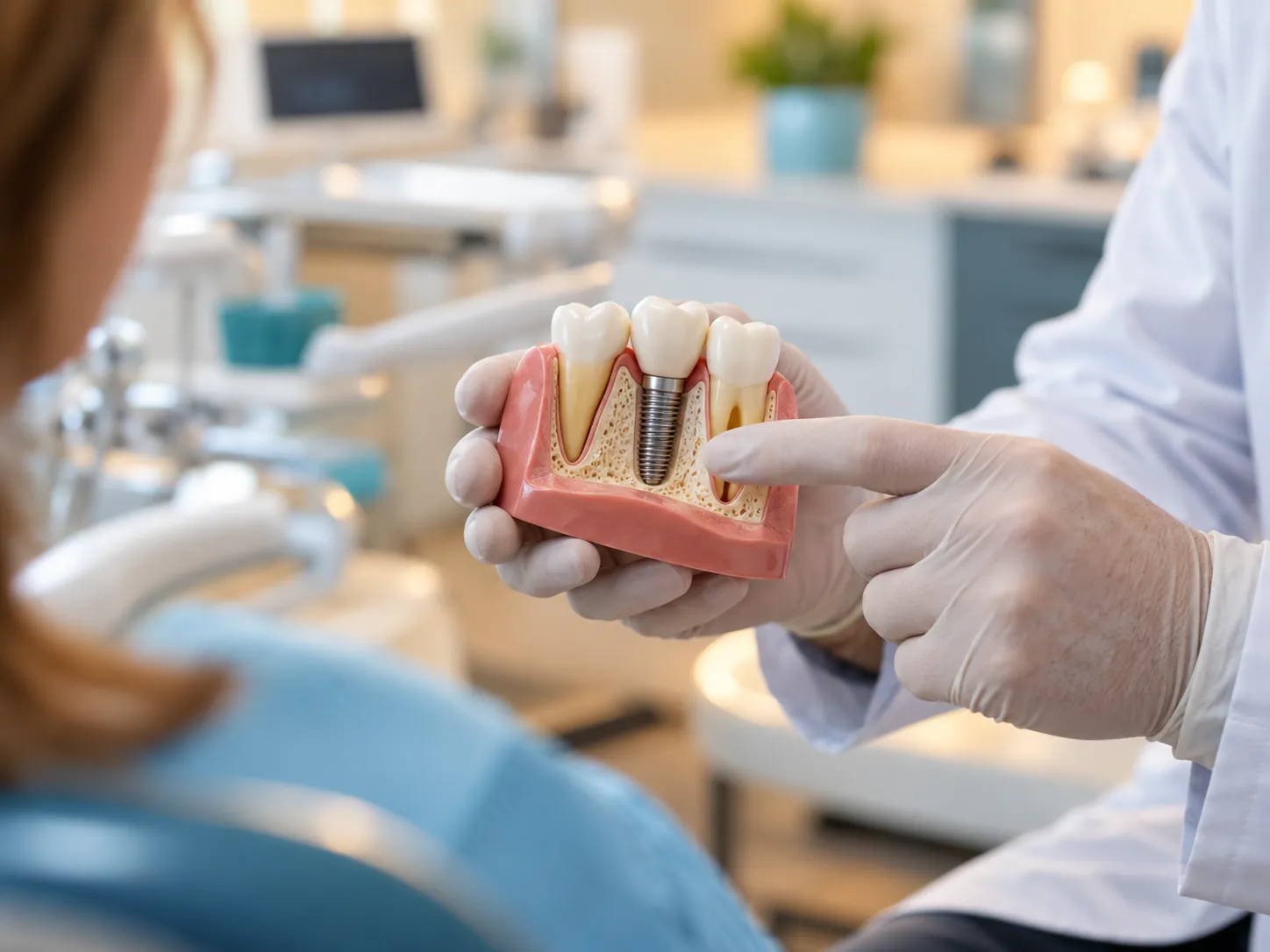
What is a dental implant?
A dental implant is a small screw, usually made of titanium or ceramic (zirconia), which is placed in the jawbone. Over the following weeks and months the bone grows together with the implant. Only then is the visible restoration – for example a crown – permanently attached.
What options are there?
- Single implant: replaces a single tooth without grinding down the neighbouring teeth.
- Multiple implants: support a bridge when several adjacent teeth are missing.
- All-on-4 / All-on-6: in a toothless jaw, four or six implants support a fixed bridge for the whole jaw.
- Immediate loading (“teeth in a day”): in suitable cases you receive temporary teeth directly after the implants are placed. The final restoration follows after healing.
- Implant-supported denture: a removable denture clips onto implants (e.g. snap-on system) and therefore sits much more firmly.
How the treatment usually works
- Beforehand: you send the clinic a current X-ray and receive an initial treatment proposal with a cost estimate.
- First stay (often around 4–7 days): examination and 3D X-ray on site, tooth extraction and bone augmentation if needed, placing the implants, temporary restoration.
- Healing time (usually around 3–6 months): you are back home. The bone grows together with the implants.
- Second stay (often around 5–7 days): impression or digital scan, try-in and fitting of the final restoration.
These times are based on experience and may differ considerably in individual cases, for example if extensive bone augmentation is necessary. The clinic will give you the binding schedule.
Who are implants suitable for?
In principle for most adults with sufficient jawbone. Caution is needed with heavy smoking, poorly controlled diabetes, untreated periodontitis, certain medications (e.g. for osteoporosis) or after radiotherapy of the head area. Tell the clinic openly about any pre-existing conditions and the medication you take.
What to look out for with implants
- Ask for the manufacturer and type of the implants and request an implant passport. This allows a dental practice at home to order matching parts later.
- Allow enough time. If you want to complete everything in one stay, ask carefully whether this makes medical sense in your case.
- Ask about the guarantee conditions. The group states that it provides a guarantee on implant treatments – ask for the exact conditions in writing before treatment begins.
- Clarify who will carry out follow-up checks and what happens if you have problems after returning home.
Are implants possible for you?
Send us a short enquiry. The clinic will contact you, ask for your X-ray and prepare a treatment proposal without obligation.